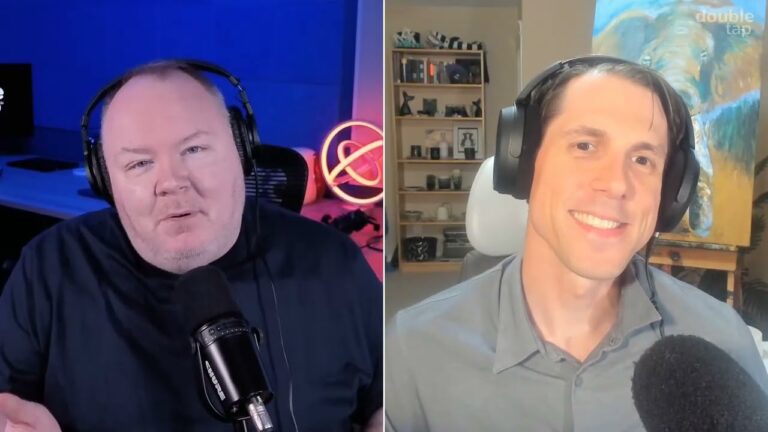
Episode
Audio Description For Sighted People, Clipman Updates, and the AI Extinction Story
Watch this episode
Subscribe so you never miss an episode
In this episode
Audio description was built for blind and partially sighted viewers. RNIB brought broadcasters to London to ask whether sighted audiences want it too, and what that would change for the rest of us. Steven Scott reports back from the Audio Is King event, before the show turns to Clipman, an Audacity 4 warning, and the Anthropic resignation that put AI extinction talk on every front page.
RNIB surveyed more than 1,200 sighted people and found roughly 42 percent already knew what audio description is. Steven and Shaun compare that with audiobooks, which stayed a small shelf of expensive CD boxsets until Audible made them mainstream and quality improved for everyone. The same could happen with description, listened to on a commute or at the gym, if discovery improves. Shaun argues the real barrier is presentation: burying it in a languages menu keeps it hidden, and the name itself may need rethinking. Described video, the term used in Canada, came up as a clearer alternative.
Behind the slow progress sits a familiar problem. Accessibility teams inside broadcasters are small, and every department arrives at the priorities meeting asking where the value is. Steven makes the case that description could be an offering rather than a cost, pointing to companion podcasts, to what television could learn from audio-first storytelling, and to AMI’s integrated described video, where the script carries the picture instead of a separate voice. He also pays tribute to Sonali Rai at RNIB and to audio describer Marie Campbell, whose voice Steven recognised live on stage.
Two warnings follow. Audacity 4 rebuilds the interface in Qt and, in testing, screen reader access is badly broken, so stay on the version you have. New iOS and macOS releases land next week, and the advice is to wait a month and read the AppleVis bug report first. On a brighter note, Clipman from Andre Louis now runs on Linux and offers a self-hosted server, so encrypted clipboard sync works across Windows, Mac, Android and iPhone without a cloud account.
The episode closes on Jacob Coxon, who resigned from Anthropic this week saying neither Anthropic nor OpenAI is acting responsibly and that both are racing toward self-improving superintelligence. Colleagues publicly agreed the risk is real. Steven and Shaun weigh how seriously to take percentage odds on human extinction, why biological weapons and infrastructure hacking changed the shape of the fear, and why the story has been met with near silence inside the blind tech community.
Chapters
0:00 – Please don’t kill us all
0:19 – RNIB’s Audio Is King event and audio description for sighted audiences
24:32 – Clipman gains Linux support and a self-hosted server
29:08 – Do not install Audacity 4
33:14 – New iOS and macOS updates: wait a month
35:52 – Jacob Coxon resigns from Anthropic
Relevant Links
RNIB: https://www.rnib.org.uk
Clipman by Andre Louis: https://github.com/OnjLouis/Clipman
AMI: https://www.ami.ca
Twenty Thousand Hertz: https://www.20k.org
Audacity: https://www.audacityteam.org
AppleVis: https://www.applevis.com
Anthropic: https://www.anthropic.com